Car Won't Start After Sitting: What to Check and Where to Look for the Cause
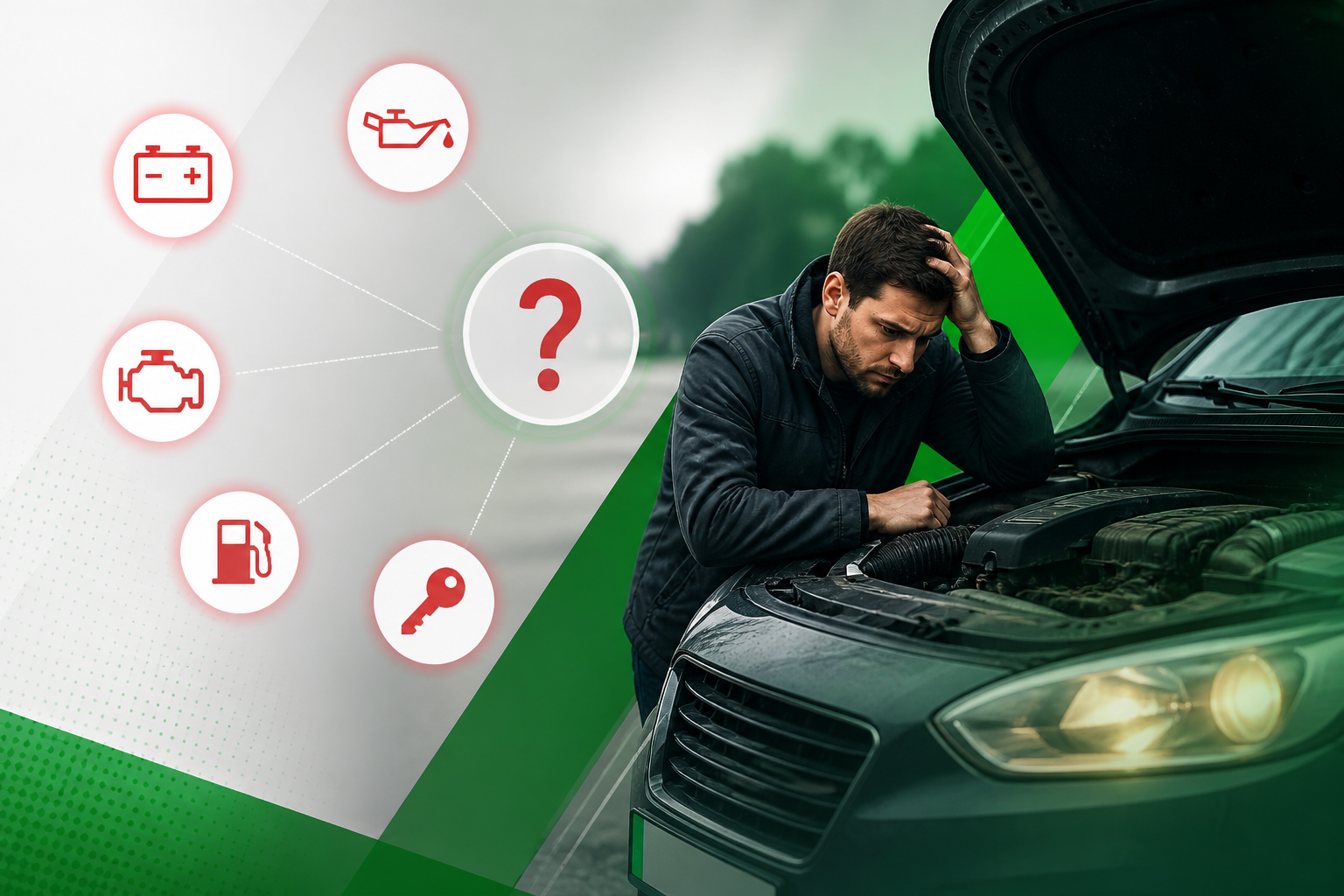
Why starting problems appear after a car has been sitting
Many drivers know the situation: the car was running fine, it was left parked for a few days or a week, and suddenly it won't start. Diesel owners are especially familiar with this.
The reason is that while the car sits, some systems "lose their stability". Fuel can partly drain back into the tank, air gets into the system and the battery loses charge. All of this adds up and shows itself precisely at the moment you try to start.
The important thing here is not to start replacing parts straight away, but first to calmly work out what actually happened.
Where to start checking
In most cases the cause comes down to the basics.
First of all, the battery. After the car has been sitting it often runs down, especially if the vehicle isn't new or it's cold outside. This isn't always obvious: the starter may crank, but not fast enough for the engine to fire.
The second common cause is fuel. In diesel cars, after a period of standing, fuel sometimes partly "drains" back into the tank and air appears in the system. As a result, the engine cranks but doesn't get the amount of diesel it needs.
The fuel filter is also worth mentioning. If it hasn't been changed in a long time, dirt or water can build up in it. After the car has been sitting, this often shows up as a complete failure to start.
What most often fails on a diesel specifically
If the basics have been checked and the problem is still there, the cause is most likely in the fuel system.
One of the most typical cases is an air leak. Somewhere in the system there's a small leak that is barely noticeable while the engine is running. But when the car stands, air gets into the system through it.
After that, starting becomes difficult or even impossible until the system fills up with fuel again.
Another possibility is worn injectors. They can let fuel leak back, causing system pressure to drop. After the car has been sitting, this is especially noticeable: the engine cranks for a long time and doesn't start on the first try.
Don't rule out the high-pressure fuel pump (HPFP) either. If the pump is already worn, it may not build the pressure needed for starting, especially after the car has been sitting.
Why the car may start and then stall straight away
Sometimes the engine does start, but runs for a few seconds and then stalls. This is another typical symptom.
It usually means that:
- air has got into the system
- fuel delivery is unstable
- there is a pressure problem
The engine "catches" on the fuel that's left, but then can't keep running normally.
What not to do
When the car won't start, it's tempting to just keep cranking the starter in the hope that it'll "start by itself".
That's a bad idea.
First, you can flatten the battery. Second, you put extra strain on the starter. And most importantly, it doesn't fix the cause.
Likewise, don't rush to replace the injectors or the pump without diagnostics. Very often the problem is much simpler.
When you can't do without diagnostics
If the car fails to start after sitting more than once, that's already a warning sign.
It's also worth bringing it in for a check if:
- the engine cranks for a long time before starting
- it doesn't start on the first try
- it starts and then stalls
- the problem keeps coming back
In cases like these, what's needed is a comprehensive fuel system check, not guesswork.
Conclusion
A car that won't start after sitting isn't a fluke; it's the result of a specific problem. Most often that problem is related either to the battery or to the fuel system.
The right approach is not to panic or act at random, but to check the main things step by step. In most cases this lets you find the cause quickly and avoid unnecessary costs.