How Often Should Diesel Injectors Be Checked?
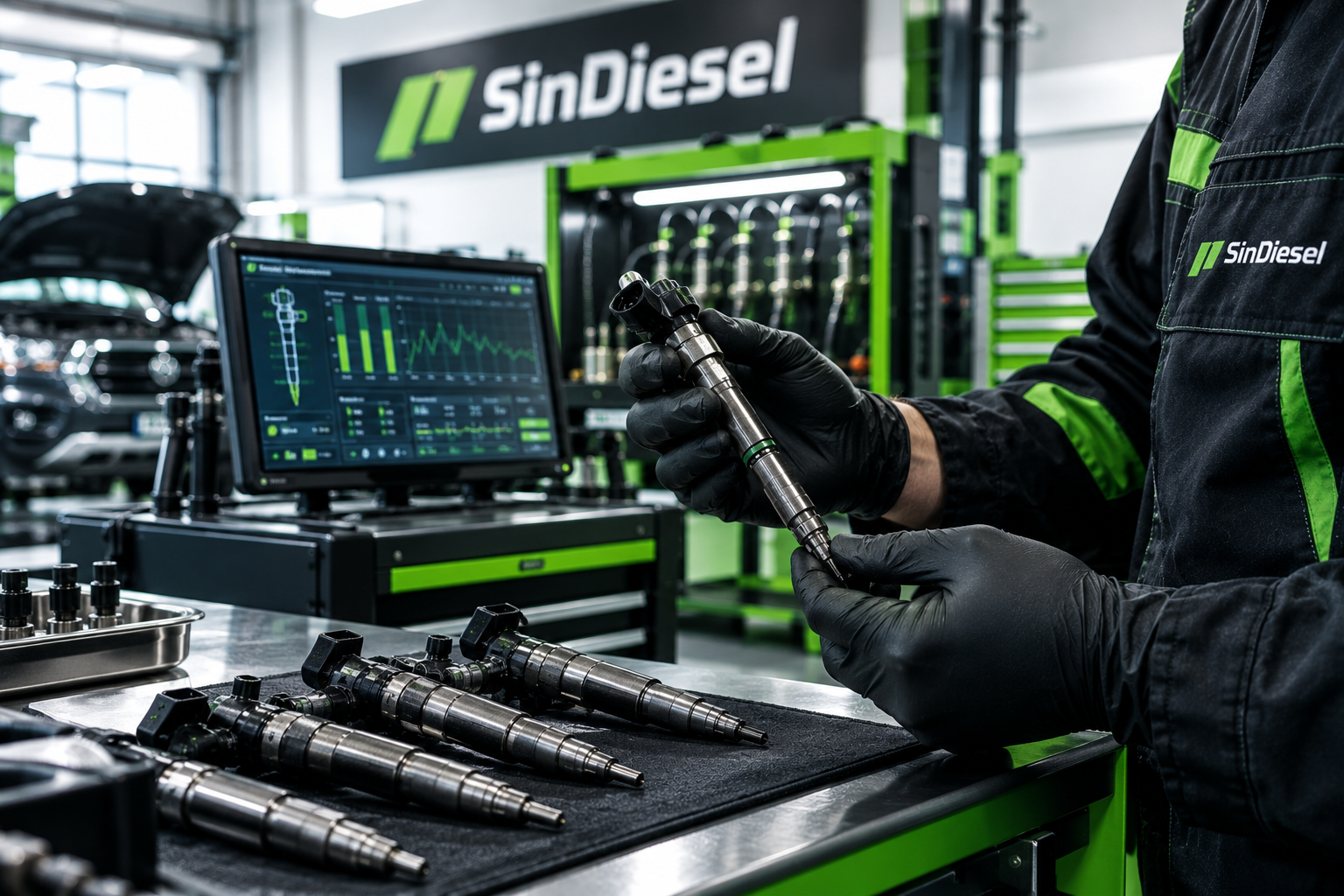
Diesel injectors work to very tight tolerances and have a direct effect on starting, fuel consumption, power and how smoothly the car runs. Over time their internal components wear, and contamination or poor-quality fuel can make faults appear sooner.
That said, injectors do not necessarily fail all of a sudden. Early on, the changes can be barely noticeable: the engine takes a little longer to start, fuel consumption creeps up or a slight vibration appears at idle.
So rather than waiting for serious symptoms, it pays to check the condition of the fuel system in good time.
How often should diesel injectors be checked?
There is no universal diagnostic interval that suits every diesel vehicle. How often to check depends on the injector design, the manufacturer's recommendations, mileage, operating conditions and fuel quality.
First and foremost, follow the maintenance schedule for your specific vehicle. During routine servicing, it makes sense to pay attention to how the engine runs and the condition of the fuel system. If the manufacturer specifies particular injector checks, go by its recommendations.
For high-mileage vehicles, vehicles in heavy use or ones with an unknown service history, an injector check can be worthwhile even when there are no obvious symptoms. This is especially true for commercial vehicles that spend a lot of time working under load or idling for long periods.
The key rule: injectors are checked based not just on mileage but on their actual condition and operating conditions. There is no need to wait for a particular number on the odometer if the engine is already showing signs of a fault.
When should injectors be checked sooner?
Even if a scheduled inspection is not yet due, there are situations where diagnosis should not be put off.
One of the most common signs is a change in how the engine starts. If the diesel has started taking longer to fire up, especially after sitting overnight or when hot, the fuel system should be checked. The cause may be poor fuel atomization, excessive injector back-leakage or insufficient rail pressure.
Another warning sign is unstable running. Vibration at idle, uneven rpm, misfires or a feeling that the engine is not running on all cylinders can point to a faulty injector. However, these symptoms can also have other causes, so it is important to establish the real one.
Also watch for changes in fuel consumption. If the car has started using more diesel with no obvious change in routes, load or driving style, check not only the injectors but also the engine's other systems.
Other reasons to get a diagnosis include unusual exhaust smoke, loss of power, strange noises and ECU fault codes related to the fuel system. A rising engine oil level is a particular red flag, since in some cases it can mean fuel is getting into the oil.
Why shouldn't you go by mileage alone?
Two vehicles with the same mileage can have injectors in completely different condition. One may have been driven mostly on long runs and serviced regularly, the other in town with frequent starts and stops.
Injector service life is affected by diesel fuel quality, water and contaminants in the system, timely fuel filter changes and the overall condition of the engine. Operating conditions matter too: constant work under heavy load and long periods of idling put different demands on injectors than ordinary passenger-car driving.
Service history also needs to be taken into account. If you bought the car used and do not know when the injectors were last checked, it makes sense to assess them as part of a comprehensive diagnosis.
How are diesel injectors checked?
The test method depends on the type of fuel system and the vehicle's symptoms. Diagnosis can involve several stages.
First, the engine's running is assessed and fault codes are read. Diagnostic equipment is used to analyze the available data, including fuel delivery corrections and, on Common Rail systems, fuel rail pressure.
However, scan tool data does not always point clearly to a faulty injector. It can be affected by the condition of the other injectors, cylinder compression, fuel pressure and other factors.
If needed, a back-leakage test is carried out. It helps identify injectors that return too much fuel, but it is no substitute for a full check of how they perform.
For a more detailed assessment, the injector is removed and tested on a specialized test bench. This lets its operating parameters be compared against the specified requirements, and fuel delivery, back-leakage and sealing checked in the prescribed test modes.
It is the test results that show whether a repair is needed, individual components need replacing, or the injector simply needs to be monitored.
Do injectors need to be removed for a preventive check?
Not always. If the engine runs smoothly and there are no signs of a fault, diagnosis can start with checks that do not involve removal. Based on the results, the technician decides whether there are grounds for a bench test.
Removing all the injectors just because the car has reached a certain mileage makes no sense without a specific reason. Removal takes time, the right tools and the correct procedure. On top of that, the injectors have to be refitted properly, with the necessary seals and following the manufacturer's procedures.
If the on-vehicle check finds deviations, or the symptoms suggest a possible internal fault, bench testing will give a more accurate picture of the condition of the parts.
How can you extend the service life of diesel injectors?
The most important thing is to keep the fuel system clean. Use good-quality diesel fuel, change the fuel filter on schedule and follow the manufacturer's maintenance recommendations.
If you suspect water or contaminated fuel has got into the tank, have the system checked as soon as possible. Do not try to solve every problem with fuel additives alone: they cannot fix mechanical wear or damage to the injector's internal components.
It is also important to react to the first changes in how the engine runs. Timely diagnosis lets you catch a problem before it causes further damage to the fuel system.
Conclusion
How often diesel injectors should be checked depends on the manufacturer's recommendations, operating conditions and the actual condition of the fuel system. There is no single mileage after which every set of injectors must be removed and bench tested.
If the engine runs smoothly, stick to the maintenance schedule and watch for any change in how it runs. But if the car has become harder to start or has started to vibrate, smoke or use more fuel, the diagnosis should be done sooner.
A timely check helps establish the real condition of the injectors and make an informed decision about repair or replacement. Not every fault calls for new parts: in many cases, whether a repair is possible is decided after diagnosis.