Fuel Rail Pressure Dropping: Causes and How to Diagnose It
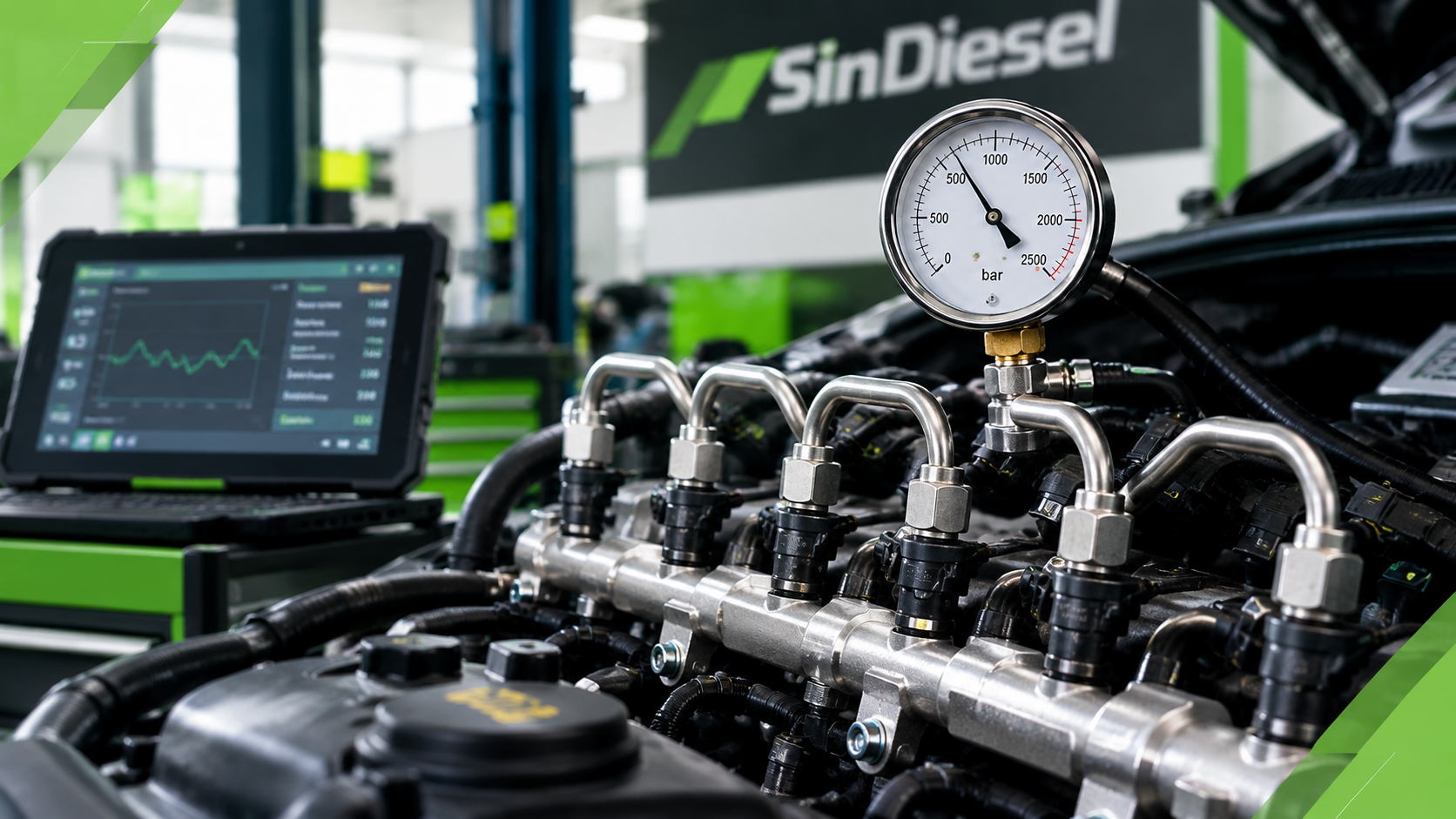
The fuel rail is a key part of a Common Rail diesel system. It is where fuel is stored at the high pressure the injectors need to work properly. If the actual rail pressure falls below what is required, the engine may run unevenly, lose power or fail to start altogether.
That said, a pressure drop does not always mean the fuel rail itself is faulty. The cause may lie in the high-pressure fuel pump (HPFP), the injectors, the pressure control valve, the fuel filter or other parts of the system. So for a proper repair it is not enough to simply record low pressure; you need to find out exactly why the system cannot maintain it.
What should fuel rail pressure be?
In Common Rail systems, fuel pressure is generated by the HPFP and regulated by the relevant valves and the vehicle's electronics. The required value depends on the design of the specific engine and its operating mode.
When the engine is started, the system has to build the required pressure fairly quickly so the injectors can inject fuel. While the engine is running, the value changes with load and rpm.
So a pressure figure on its own, without reference to the specific vehicle, does not tell you whether there is a fault. What matters is comparing actual and specified pressure and analyzing how the system behaves in different operating modes.
Why does fuel rail pressure drop?
There can be several causes, and they are not always tied directly to a single component.
One common cause is insufficient HPFP output. If the pump is worn or has internal faults, it cannot build the required pressure in the system. This may show up especially during starting or under heavy engine load.
Another cause is excessive back-leakage from the injectors. If one or more injectors have increased internal leakage, some of the fuel returns to the return line. As a result, the system loses the fuel volume it needs to maintain rail pressure.
Problems can also be caused by the pressure control valve or the metering unit. A fault in these components disrupts control of the fuel supply and can cause the pressure to deviate from the required value.
The fuel filter should not be ruled out either. If it is clogged or does not let enough fuel through, the HPFP does not get the fuel volume it needs. In that situation the pump may be in good order, but the system still cannot build the required pressure.
What symptoms point to low pressure?
The most noticeable sign is starting problems. If the system cannot build the required pressure quickly while the starter is cranking, the engine may take a long time to start or not start at all.
On the road, low rail pressure can show up as loss of power, unstable engine running or hesitation under acceleration. In some cases the car may go into limp mode.
Fault codes related to fuel rail pressure may also appear. However, such a code does not automatically mean the HPFP is the faulty part. The ECU records that the parameter has deviated, but the cause of that deviation needs separate diagnosis.
How to find the cause of the pressure drop
The first step is computer diagnostics. Using diagnostic equipment, technicians check specified and actual rail pressure and watch how they change during starting and while the engine is running.
If the actual pressure is lower than required, the next task is to pinpoint exactly where the problem arises.
Next, the fuel filter, the fuel supply to the pump and the operation of the pressure control components are checked. The injectors get particular attention, since excessive back-leakage can be one of the reasons for insufficient system pressure.
If the HPFP is suspected, its condition has to be assessed separately. Where the design and repair procedure allow for it, the pump is tested on a specialized test bench.
Why you shouldn't replace the HPFP right away
A mistake often made during repairs is replacing the most expensive component without a full diagnosis.
Low rail pressure really can be related to the HPFP, but the same symptom can be caused by injectors with high back-leakage, problems with fuel supply control or insufficient fuel supply to the pump.
If you replace the HPFP without eliminating the real cause, the problem may persist. That is why diagnostics should be carried out step by step, from checking the fuel supply to assessing how the high-pressure components work.
Can you drive the car if rail pressure is dropping?
If the problem is already affecting how the engine runs, you should not put off diagnostics.
Unstable pressure can lead to the fuel system working incorrectly and to further wear of its components. In addition, if the cause is a faulty HPFP and its breakdown is producing metal shavings, the contamination can spread throughout the entire fuel system.
So when the relevant symptoms appear, it is better to establish the cause of the fault before the problem leads to a more expensive repair.
What to do if fuel rail pressure is too low
First and foremost, a comprehensive diagnosis of the fuel system is needed. Don't rely on a single scanner fault code or one isolated reading.
You need to check actual and specified pressure, the condition of the fuel filter, the fuel supply, injector back-leakage and the operation of the control components. If necessary, the HPFP is diagnosed separately.
This approach makes it possible to identify the real cause of the pressure drop and understand exactly which component needs repair or replacement.
Conclusion
A drop in fuel rail pressure is not a fault in its own right but a symptom that can have different causes. The problem may be related to the HPFP, the injectors, the fuel filter, the pressure control valves or the fuel supply to the pump.
That is why replacing a single component without diagnosing first does not always solve the problem. The right approach is to check how the system works, compare actual and specified parameters, identify the source of the pressure drop, and only then decide on the repair.
Timely diagnostics not only help restore normal engine operation but also prevent damage to other components of the diesel fuel system.