Why Does a Diesel Engine Run Rough at Idle?
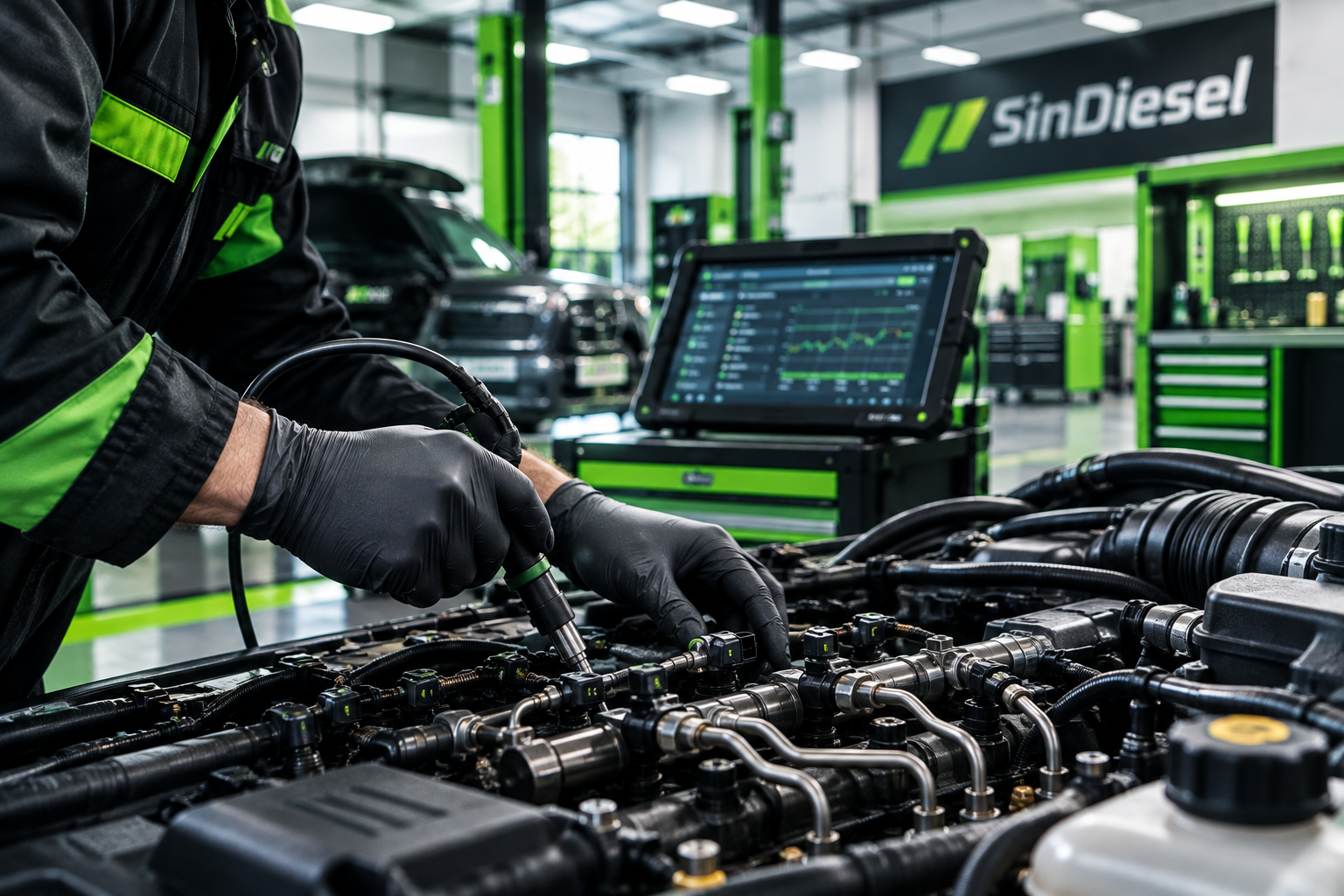
A diesel engine that runs unevenly at idle is not something to ignore. The engine may shake more than usual, the rpm may hunt up and down, and it no longer sounds smooth. Sometimes it feels as if the engine is not firing on all cylinders, even though it partly smooths out once you press the accelerator.
Drivers often describe these symptoms as a diesel that "misfires" or "runs rough on one cylinder." The cause may lie in the injectors, the high-pressure fuel pump (HPFP), the air intake system, compression or other engine components. To fix the fault, you need to find out why one or more cylinders are not working properly, rather than trying to chase the symptoms without a diagnosis.
What does it mean when a diesel runs rough at idle?
In a healthy diesel engine, all cylinders work in step. Fuel is injected at the right moment, the right amount of air comes in, and the mixture burns efficiently in the combustion chambers. That is what lets the engine hold a steady idle without any throttle input.
If one cylinder produces less power or combustion in it is disrupted, the engine starts running unevenly. The driver may feel the body vibrating, jerks or fluctuating rpm, or hear an unusual noise.
These problems are often more noticeable at idle, because the engine is running at minimum rpm and any imbalance has a bigger effect on how it runs. Still, vibration on its own does not mean the injector is the culprit. Similar symptoms can come from faults in other systems, or even from worn engine mounts.
Main reasons a diesel runs rough at idle
Faulty diesel injectors
Injectors are responsible for metering and atomizing fuel precisely. If one of them delivers the wrong amount of fuel, leaks or atomizes it poorly, that cylinder may not work as it should.
Depending on the nature of the fault, the engine may vibrate at idle, start harder, lose power or smoke. In some cases the symptoms are worse on a cold engine, in others after it has warmed up.
Keep in mind that the fault is not always over-fueling. An injector can also deliver too little fuel or have excessive back-leakage, which upsets the whole Common Rail system.
HPFP problems and fuel system pressure
The high-pressure fuel pump (HPFP) builds the pressure the injection system needs to work. If the pump is worn or the pressure control system is not working correctly, fuel delivery can become unstable.
In Common Rail systems this can show up as fluctuating actual fuel rail pressure, rough running, hard starting or loss of power.
At the same time, low pressure does not necessarily mean the HPFP is at fault. The cause may be excessive injector back-leakage, a faulty pressure control valve, a clogged fuel filter or insufficient fuel supply to the pump.
That is why the system needs to be checked as a whole during diagnosis, rather than jumping straight to replacing an expensive component.
Clogged fuel filter or fuel supply problems
A diesel engine needs an uninterrupted fuel supply to run smoothly. If the filter is clogged, air is being drawn into the line or fuel delivery is intermittent, the engine may run unevenly.
These problems sometimes appear after filling up with poor-quality fuel, an overdue filter change or a leak at the fuel connections.
If, along with the rough running, the engine has started cranking for a long time, lost power or stalls, check not only the injectors and HPFP but also the fuel supply to them.
Air intake and EGR faults
Diesel fuel needs the right amount of air to burn properly. A dirty intake tract, faulty sensors or a faulty exhaust gas recirculation (EGR) valve can all disrupt how the engine runs.
For example, if the EGR valve sticks in the wrong position, the amount of recirculated exhaust gas may not match the engine's operating conditions. This can cause an unstable idle, poorer throttle response and fault codes.
In such cases, repairing the fuel system will not solve the problem if the real cause lies in the air intake or the engine management system.
Low compression in one cylinder
Another possible cause is mechanical engine wear. If a cylinder does not have enough compression, the air may not get hot enough during compression for the fuel to self-ignite normally.
This can show up as rough running, especially on a cold engine, hard starting and reduced power. The cause may be worn piston rings, a damaged cylinder, valve problems or other mechanical faults.
If checking the injectors and fuel system turns up nothing abnormal, the next step is to assess the mechanical condition of the engine, including a compression test using an appropriate method.
Glow plugs and other causes of unstable running
If the engine runs rough mainly after a cold start, consider the condition of the glow plugs and their control system. In low temperatures, faulty glow plugs can make starting harder and cause rough running for the first few minutes.
If the engine keeps shaking after it has warmed up, look for other causes. Also, a strong vibration can be caused by worn engine mounts even when combustion in the cylinders is perfectly normal.
That is why it is important to tell the difference between the engine actually running unevenly and vibration being transmitted to the body through the mounts.
How do you find the cause when a diesel runs rough at idle?
Diagnosis should start by pinning down the conditions under which the problem appears. Does the engine run unevenly only when cold, or do the symptoms persist after warm-up? Has fuel consumption changed? Is there smoke from the exhaust? Is the car hard to start?
These observations help decide where to look, but they do not replace actual testing.
The next step is a scan tool diagnosis. It lets you read fault codes and analyze the available engine data. On Common Rail systems, you can check the actual and specified fuel rail pressure, fuel delivery corrections and other values.
That said, injector correction values are not conclusive proof that an injector is faulty. Other factors can affect these values too, so the results have to be assessed together with the rest of the data.
If the injectors are suspect, further checks are carried out, including a back-leakage test and bench testing after removal. If the fuel system is working within acceptable limits, the air intake, EGR, compression and other possible sources of the problem are checked.
This approach makes it possible to pin down the actual cause and avoid replacing parts that are in fact working fine.
Can you keep driving if your diesel runs rough?
If the engine has started running unevenly, do not put off diagnosis for long. Even if the car still drives, the fault may gradually get worse.
Particularly dangerous signs are heavy smoke, a sudden loss of power, a metallic knock, a sudden rise in the engine oil level or a strong smell of fuel. With symptoms like these, it is better to stop driving the car and have it checked, and if necessary get it to the workshop without driving it there under its own power.
If a faulty injector delivers too much fuel, it can cause improper combustion and, in some cases, fuel getting into the engine oil. If the cause is related to fuel system pressure or a mechanical engine fault, continuing to drive can also make the repair bigger.
Conclusion
If a diesel engine runs rough at idle, the cause may be the injectors or the HPFP, but it may just as well be the air intake system, EGR, compression or the engine mounts. The same symptoms do not always mean the same fault.
To avoid spending money on replacing good parts, you need to check the engine's operating parameters step by step and find the source of the problem. If the injectors or the HPFP are suspect, it makes sense to have a specialist fuel system diagnosis done.