Do Metal Shavings Mean You Have to Replace the Whole Fuel System?
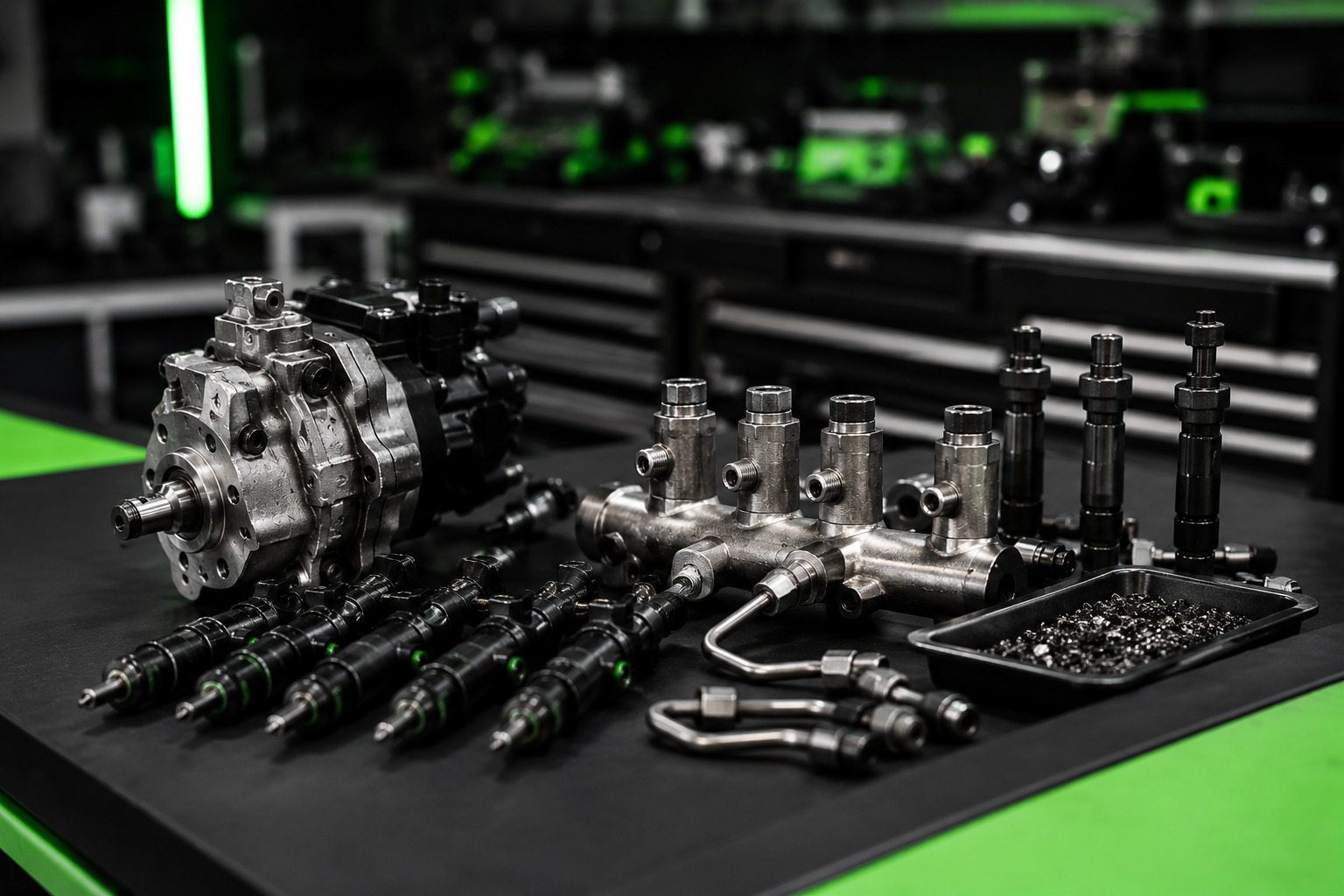
Metal shavings really can spread through the fuel system and damage the injectors, the fuel rail and other components. However, the scope of the repair needed depends on what caused the shavings, how much of them there is, the condition of the high-pressure fuel pump (HPFP) and how far the metal particles have managed to travel through the system.
So the right approach is not to replace everything in sight, but first to identify the source of the shavings and check the fuel system components.
Where do metal shavings in the fuel system come from?
One of the most common sources of metal shavings is the HPFP, the high-pressure fuel pump.
Inside the pump are precision parts that have to work to very tight tolerances. With insufficient lubrication, poor-quality fuel, water ingress or simply natural wear, individual pump components can become damaged.
As a result, metal particles end up in the fuel.
From there they can be carried with the fuel throughout the system, through the fuel line and the rail and on to the injectors.
That is why, when shavings are found, it is important not just to clean the fuel filter but to find out what caused them.
Why are metal shavings dangerous for a diesel fuel system?
Modern diesel fuel injection equipment works with very small clearances between precision parts.
A metal particle carried with the fuel into a system component can cause additional wear or damage.
The greatest risk arises when the shavings have already passed through the HPFP and reached other parts of the system.
At that point the problem is no longer just a single faulty pump.
Shavings can get into:
- the fuel rail;
- regulators and valves;
- the fuel lines;
- the injectors;
- the fuel filter and its housing.
So once metal particles are found, it is important to assess the entire system, but that does not mean automatically replacing every one of its components.
Does the whole fuel system need replacing after metal shavings appear?
No, the presence of shavings alone does not mean the entire fuel system has to be replaced.
This is one of the most common myths, and it can lead to unjustifiably high costs.
First you need to determine:
- where the shavings came from;
- how much metal debris got into the system;
- whether the car was driven after the fault appeared;
- whether the shavings reached the injectors;
- what condition the HPFP is in;
- whether there are metal particles in other parts of the system.
Only then can the real scope of the repair be determined.
In one case it is enough to repair the HPFP, clean the system and check the injectors. In another, if the shavings have already spread through the system and damaged several components, the repair may indeed be extensive.
What to do if you find metal shavings in the fuel filter
If you notice shiny metal particles while changing the fuel filter, you should not simply fit a new filter and keep driving the car.
First you need to find out where the metal is coming from.
Pay particular attention to the HPFP, since it may well be the source of the shavings.
The condition of the fuel, the filter and other accessible parts of the system should also be assessed.
If you keep driving the car, the shavings can spread further and increase the number of damaged components.
What happens to the HPFP?
If the HPFP is the source of the shavings, the pump needs a thorough diagnosis.
You need to determine exactly which parts are damaged and how badly they are worn.
In some cases the pump can be repaired by replacing the worn or damaged components and carrying out the necessary adjustments.
But if you keep driving with a faulty pump, the amount of metal debris in the system can increase.
That is why, once shavings appear, HPFP diagnostics should not be put off.
Do metal shavings damage the injectors?
They can.
If metal shavings from the HPFP have gotten into the fuel line, they can make their way to the injectors.
However, not every injector automatically has to be replaced after shavings appear.
Their condition has to be checked.
To do this, the injectors are removed and tested on a specialized test bench. The test shows whether their parameters are within spec and whether a repair is needed.
Depending on the results, the injectors may be:
- in good working order and fit for further use;
- in need of cleaning;
- in need of repair;
- beyond repair and in need of replacement.
So the decision to replace the injectors should be made based on test results, not just on the fact that shavings appeared.
Why isn't it enough to just replace the HPFP?
If it has been confirmed that the shavings are coming from the HPFP, replacing or repairing the pump itself is only part of the job.
If metal has already gotten into the fuel system, leftover shavings may remain in the fuel lines and other components even after a good pump has been installed.
They can then find their way into the repaired or new pump and the injectors all over again.
That is why, when repairing a fuel system after metal contamination, cleaning and checking the system matters, not just replacing the faulty component.
Which components should be checked after metal shavings appear?
The scope of the inspection depends on the specific situation, but attention is usually paid to the main parts of the fuel system:
- HPFP. You need to determine whether it is the source of the shavings and how serious the damage is.
- Injectors. If there is a chance metal has reached the injectors, it makes sense to test them on a bench.
- Fuel rail. It is checked for contamination and for whether its operating parameters are within spec.
- Fuel lines. It is important to rule out any remaining metal particles in the system.
- Fuel filter. Its condition can help gauge the degree of contamination and catch the problem early.
In some cases the list of checks may be longer, depending on the design of the fuel system and the diagnostic results.