Piezo vs Solenoid Injectors: What's the Difference and Which Are Better?
Why the injector type matters
Modern diesel engines depend heavily on precise fuel delivery. It's the injectors that determine how fuel enters the cylinders, how well it is atomized and how efficiently it burns.
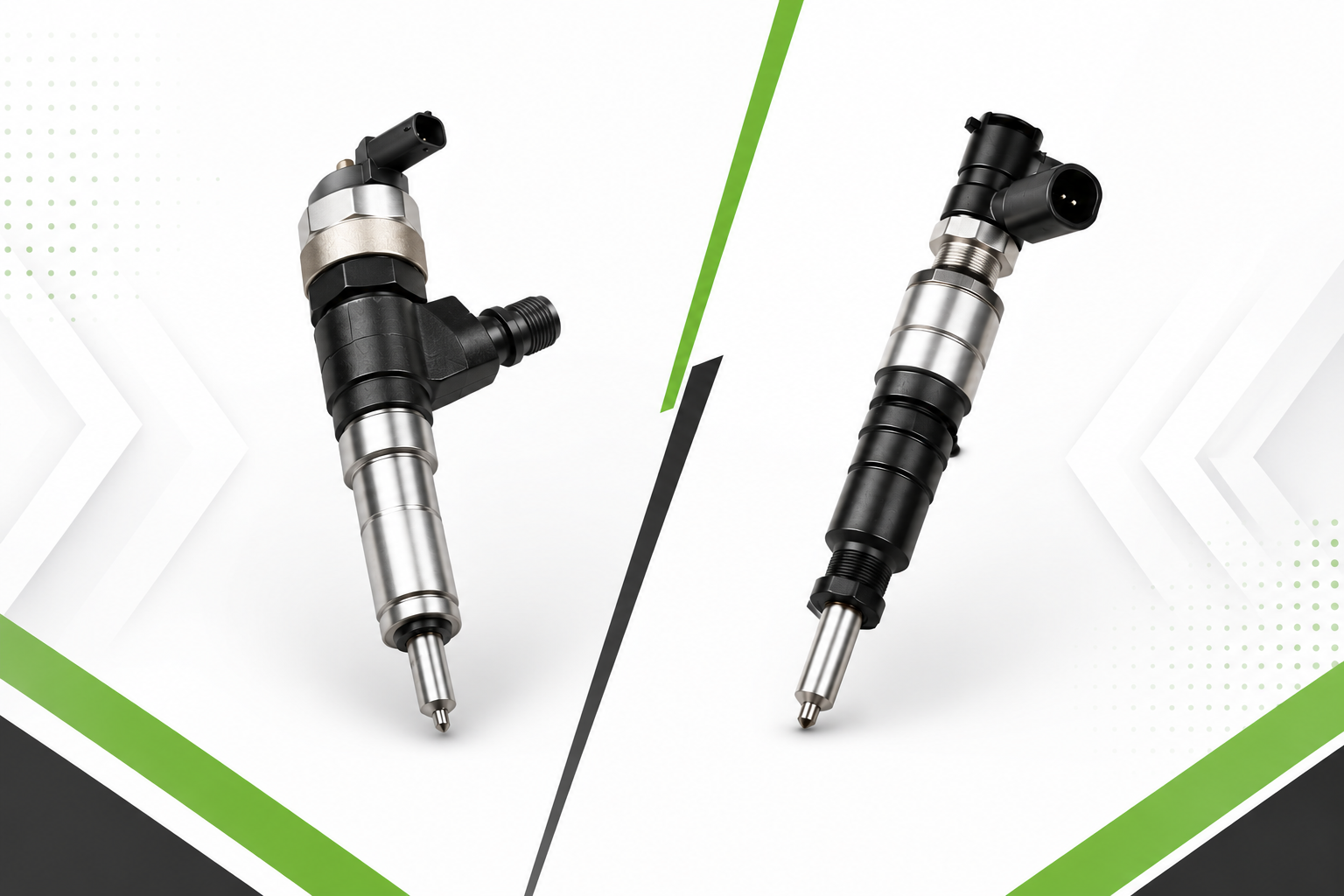
Today the two most common types of injectors are solenoid and piezoelectric. Both are used in Common Rail systems, but they differ in design, operating principle and how they are repaired.
Many drivers only learn about this difference once their car is in for diagnostics or repair. In practice, though, the injector type directly affects both how the engine behaves and how much it costs to maintain.
How solenoid injectors work
Solenoid injectors are the more traditional design and have been used in diesel engines for many years.
The operating principle is fairly simple: a solenoid receives a signal from the ECU and opens the fuel supply at the right moment.
These injectors have been fitted to many Bosch and Delphi systems and are still widely used in commercial vehicles and diesel passenger cars.
Their main advantage is their relatively simple design. They are less sensitive to fuel quality and are usually cheaper to repair.
What piezo injectors are
Piezoelectric injectors are a more modern technology.
Instead of a conventional solenoid, they use a special piezo element that responds to an electrical pulse almost instantly. This makes the injector much faster and more precise.
That's why piezo injectors make it possible to:
- meter fuel more precisely
- reduce diesel consumption
- make the engine quieter
- improve emissions performance
These systems are often used in modern premium diesel cars.
The main difference between them
In practice, drivers usually notice the difference not in the design itself but in how the car behaves and what it costs to maintain.
Piezo injectors work faster and more precisely, so the engine usually runs smoother and more economically. But that sophistication comes at the price of a more complex design.
Solenoid injectors are simpler and more "tough" when the fuel is less than ideal. That's why they are often considered the more practical choice for commercial vehicles or high-mileage cars.
Which injectors are more expensive to repair
In most cases it's piezo injectors that cost more.
The reason is simple: they are more complex in design and require more precise equipment for testing and restoration.
On top of that, some piezo injector models can only be repaired to a limited extent. In certain cases manufacturers recommend replacement only.
Solenoid injectors are usually easier to restore, and parts for them are more readily available.
Which injectors are more sensitive to fuel quality
Piezo injectors are considerably more sensitive to diesel quality.
Even slight contamination or water in the fuel can quickly affect how they work. As a result, owners of modern diesel cars are more likely to face expensive repairs after using poor-quality fuel.
Solenoid systems also suffer from bad diesel, but they usually tolerate it a little better.
How to find out which injectors your car has
Without diagnostics or a VIN check, it can be hard to tell which type of injector is fitted.
The information is usually found:
- in the manufacturer's catalog
- by the injector part number
- using diagnostic equipment
This is especially important before a repair or before ordering parts.
Can you say which injectors are better?
There's no clear-cut answer here.
Piezo injectors are the more modern technology, with better precision and lower fuel consumption.
Solenoid injectors are simpler, cheaper to maintain and often better suited to harsh operating conditions.
So it all depends on the car itself, how it's used and how much the owner values fuel economy versus maintenance costs.
Conclusion
Piezo and solenoid injectors differ in design, operating principle and how they behave in service. Piezo systems are more precise and more modern, but they are more sensitive to fuel quality and more expensive to repair.
Solenoid injectors are simpler and more practical for long-term use, especially in tough conditions.
That's why, before any repair or diagnostics, it's important to correctly identify the type of fuel system and its condition.