Truck HPFP Repair: What Every Owner Should Know
Why the HPFP matters so much on trucks
The high-pressure fuel pump (HPFP) is one of the key components of a diesel engine. It is responsible for building the required pressure and supplying fuel to the injectors at the right moment and in the right quantity.
In modern trucks the fuel system operates at very high pressure, so even a slight deviation in how the pump works can affect the whole engine. Loss of power, higher fuel consumption, smoky exhaust or starting problems often begin with an HPFP fault.
Unlike many other vehicle assemblies, the fuel pump works almost continuously under heavy load. That's why its condition has a direct impact on the reliability of heavy-duty vehicles.
Signs that may point to an HPFP fault
Pump problems most often develop gradually. At first the driver may notice that the vehicle has become less responsive or that fuel consumption has gone up.
Later the engine may become hard to start, especially after standing for a long time or when hot. The engine starts running unevenly, and a lack of power is noticeable under load.
In some cases a faulty HPFP causes black or white smoke from the exhaust. Fuel system fault codes and engine limp mode can also occur.
It's important to understand that these symptoms can resemble injector faults, so only professional diagnostics can pin down the exact cause.
Why HPFPs fail
The fuel pump's main enemy is poor-quality fuel.
Even fine solid contaminants gradually damage the pump's internal parts. Water in the fuel is even more dangerous: it causes corrosion and speeds up wear of the precision components.
HPFP service life is also affected by overdue fuel filter changes, high mileage and the engine constantly running under heavy loads.
These factors are especially relevant for trucks, since commercial vehicles often cover tens of thousands of kilometers between services.
Why driving with a faulty HPFP is risky
Many drivers keep using the vehicle even after the first symptoms appear. This can lead to far more serious consequences.
When the pump starts malfunctioning, fuel delivery to the injectors is disrupted. As a result the engine runs outside its optimal range, and the load on other fuel system components increases.
In the worst cases, internal pump wear produces metal shavings that spread throughout the fuel system. The repair is then no longer limited to the HPFP: the injectors, fuel lines and other expensive components can be damaged too.
That's why you shouldn't put off diagnostics at the first signs of a fault.
How an HPFP is repaired
A proper repair starts with a full diagnosis of the fuel pump.
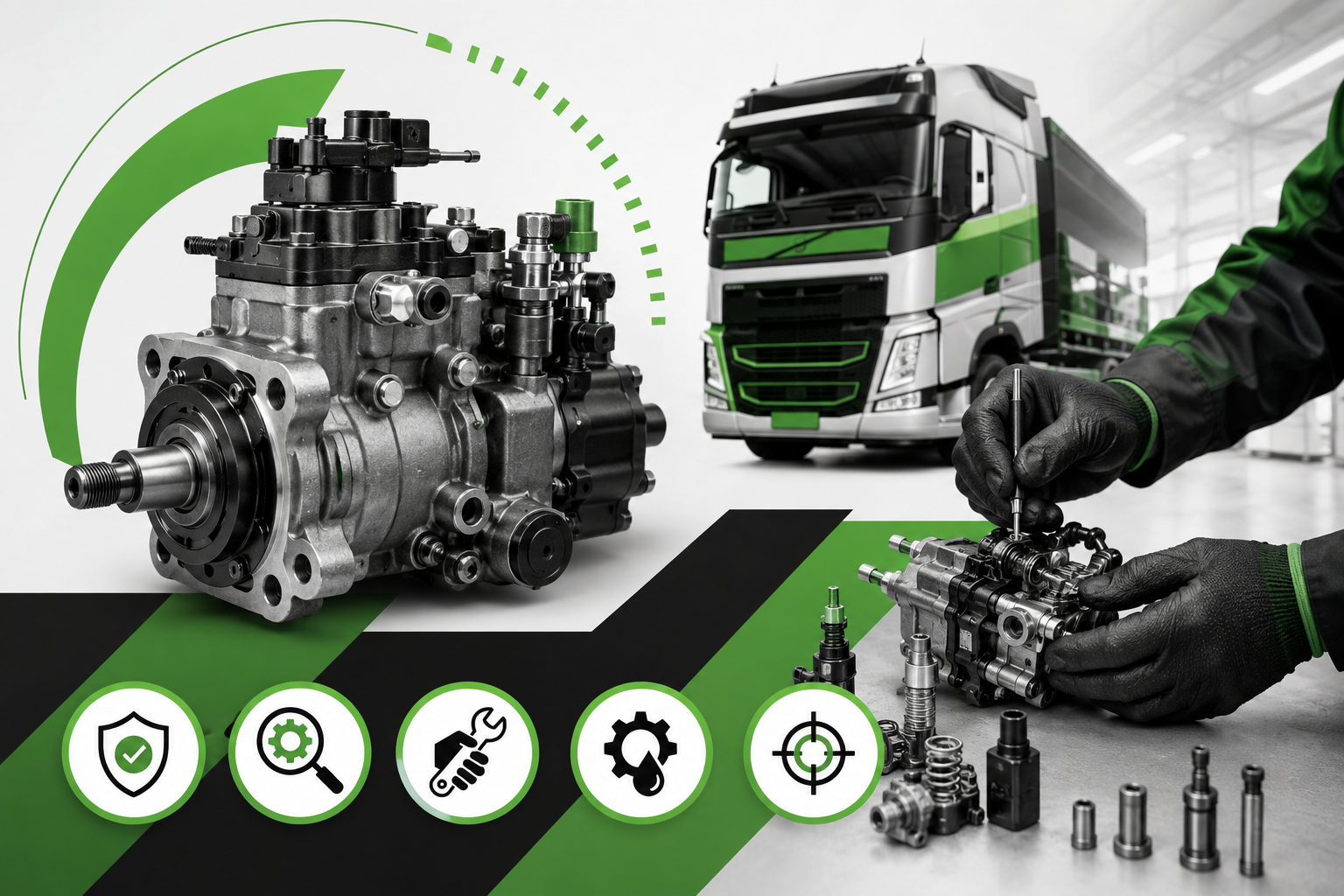
Once removed, the HPFP is tested on a specialized test bench. Technicians assess the pump's output, the pressure it builds and the operation of all its internal mechanisms.
The pump is then fully disassembled, cleaned and inspected for worn parts. Where necessary, valves, seals, plunger pairs and other components are replaced.
After the HPFP repair, the pump must go through calibration and a final bench test. Only then is it installed back on the vehicle.
Why bench testing matters
A modern HPFP can't be properly checked "by eye".
Even if the pump builds pressure, that doesn't mean it works correctly under every load condition. That's why professional diagnostics are carried out on special equipment that simulates real engine operating conditions.
A test bench makes it possible to pinpoint the cause of the fault and to confirm that after the repair the pump meets the factory specifications.
How to extend HPFP life
The best way to avoid an expensive repair is prevention.
Using good-quality diesel, changing the fuel filters regularly and having the fuel system diagnosed periodically can significantly extend the pump's service life.
It's especially important to keep an eye on the fuel system at high mileage or at the first signs of the engine running unevenly.
In most cases, catching a problem early costs far less than a repair after a serious breakdown.
Conclusion
The HPFP is one of the most important components of a truck's fuel system. A fault in it can lead not only to loss of power and higher fuel consumption, but also to serious damage to other engine components.
That's why professional diagnostics are worth doing at the first signs of fuel system trouble. A timely HPFP repair helps you avoid much bigger costs later on and keeps the truck running reliably.