Filling Up with Bad Diesel: What It Does to Your Engine
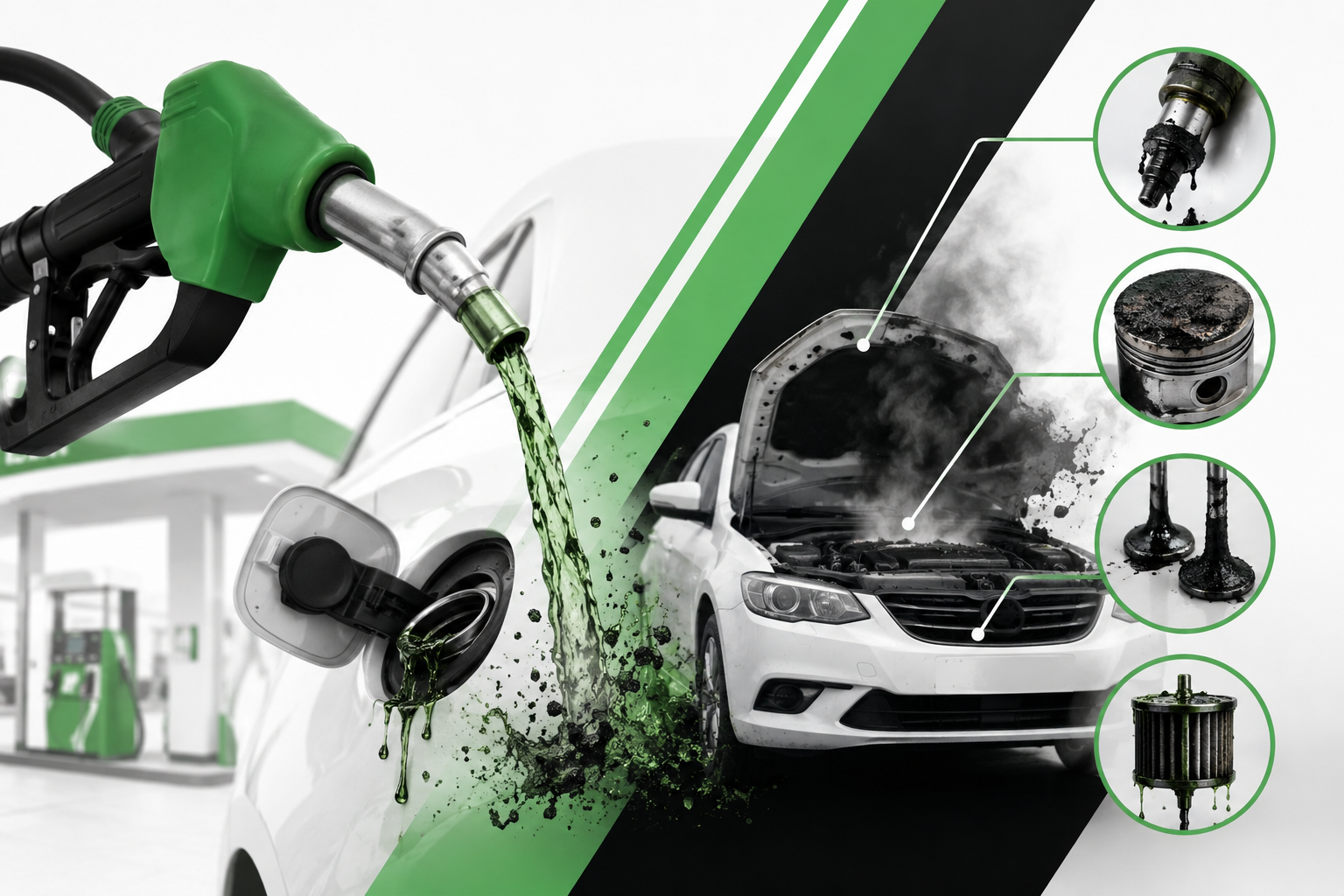
Why diesel fuel quality matters so much
Modern diesel engines have become much more powerful, economical and cleaner. At the same time, they have also become far more sensitive to fuel quality.
A modern diesel's fuel system operates at extremely high pressure, and the injectors have minimal clearances between their moving parts. That's why even a small amount of water, dirt or foreign matter in the fuel can have serious consequences.
The most dangerous part is that after one bad fill-up the problem doesn't always show itself right away. Damage often builds up gradually, and the owner only notices the fault after some time.
How to tell the problem may be the fuel
In many cases the first symptoms appear shortly after filling up.
The car may lose power, start running unevenly or respond less eagerly to the accelerator pedal. Sometimes the engine becomes harder to start or idles unevenly.
Unusual noises, smokier exhaust and higher fuel consumption may also appear.
If symptoms like these show up after filling up at a new or questionable filling station, fuel quality is the first thing to suspect.
The injectors suffer first
Injectors are among the most sensitive parts of the fuel system.
Their job is to deliver fuel into the combustion chamber as precisely as possible. To do that, an injector uses precision parts with minimal clearances.
When contaminants or water come in with the fuel, these parts start wearing at an accelerated rate. As a result, fuel atomization deteriorates, the engine loses efficiency and diesel consumption rises.
In some cases a single seriously bad tank of fuel is enough for the injectors to need professional diagnostics or repair.
The danger to the HPFP
The high-pressure fuel pump (HPFP) is also very sensitive to diesel quality.
In fact, the fuel doesn't just pass through the pump; it also partly lubricates its internal parts. If the diesel contains water or foreign particles, the internal mechanisms start to wear faster.
In the worst cases, damage to the pump produces metal shavings. These are carried throughout the fuel system and can damage the injectors, fuel lines and other expensive components.
That's why an HPFP repair after running on poor-quality fuel is often one of the most expensive types of fuel system repair.
Why fuel consumption goes up
Many drivers first notice not a breakdown but higher diesel consumption.
This happens because combustion of the air-fuel mixture is disrupted. The injectors become less precise, the engine loses efficiency and has to burn more fuel to produce the same power.
This is especially noticeable on trucks, where even a small increase in consumption per 100 kilometers quickly turns into significant extra costs.
How poor-quality fuel affects the engine
The problem isn't limited to the injectors or the pump.
Improper diesel combustion promotes carbon buildup in the combustion chamber, on the valves and in the exhaust gas recirculation (EGR) system. Over time this degrades engine performance, increases smoke and puts more load on other components.
In the long run it can even affect the service life of the turbocharger and the exhaust system.
What to do after filling up with poor-quality fuel
If the car starts running unevenly after a fill-up, don't wait for the problem to go away on its own.
The sooner diagnostics are done, the better the chances of avoiding a major repair.
Depending on the situation, you may need:
- a fuel system check;
- injector diagnostics;
- an HPFP check;
- a fuel filter replacement;
- fuel system cleaning.
In some cases, stepping in early means preventive work is enough instead of an expensive repair.
How to minimize the risks
It's hard to rule out the risk of poor-quality fuel completely, but it can be reduced significantly.
The best solution is to fill up at trusted filling stations and follow the fuel system service schedule. Changing the fuel filters on time is just as important, since they are the first to trap water and contaminants.
It's also worth paying attention to any change in how the engine runs after filling up. The sooner the problem is caught, the smaller the consequences.
Conclusion
Poor-quality diesel fuel can cause serious fuel system faults. The injectors and the HPFP usually suffer first, but over time the problem can affect the engine as a whole.
That's why saving money on fuel quality often ends up costing far more in repairs. Regular diagnostics and using good-quality diesel help preserve the fuel system's service life and avoid expensive breakdowns.