When to Replace Injector Nozzles: The First Signs of Trouble
Why nozzles are so critical
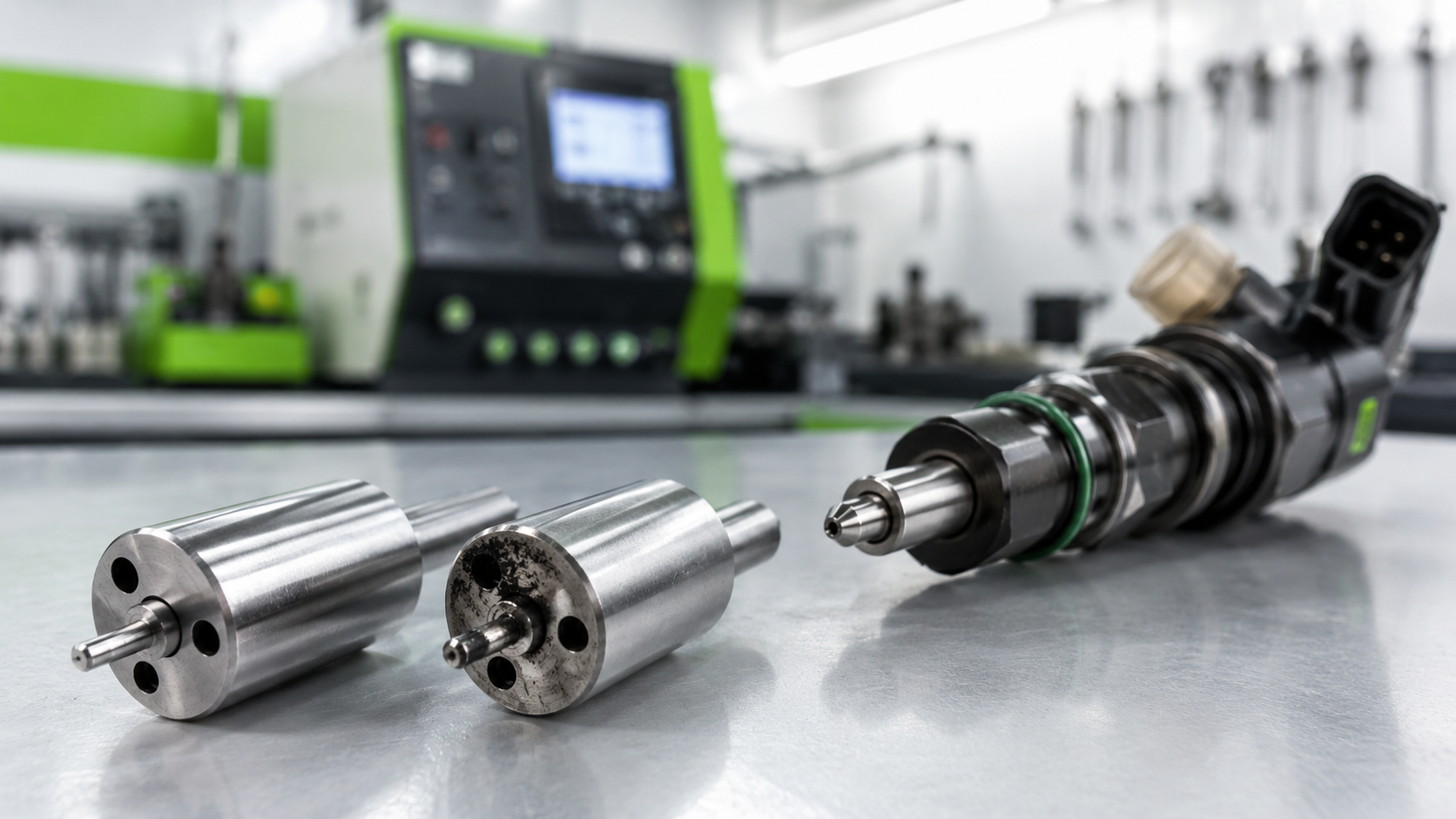
The nozzle is one of the most important parts of a diesel injector. It is responsible for metering fuel precisely and atomizing it evenly in the combustion chamber. Its condition determines how efficiently the engine runs, how much fuel it uses and whether the vehicle can develop full power.
Over time, even a quality nozzle wears out. This is a natural process, and it speeds up with poor-quality fuel, high mileage or neglected fuel system maintenance.
It is important to understand that a faulty nozzle does not always mean the whole injector has to be replaced. In many cases, a professional repair that replaces just the nozzle, followed by injector calibration, is enough.
Early symptoms of a worn nozzle
The problem usually develops gradually. At first the vehicle keeps driving, but the way the engine runs is already changing.
The symptoms owners notice most often are:
- the engine starts running harsher;
- the vehicle loses pulling power, especially under load;
- diesel consumption goes up;
- the engine takes longer to start;
- black, gray or white smoke appears from the exhaust;
- the engine idles unevenly.
Taken on its own, none of these symptoms necessarily points to a faulty nozzle, but any of them is a reason to have the fuel system diagnosed.
Why a worn nozzle affects how the engine runs
A healthy nozzle produces a spray pattern of a specific shape that ensures the diesel fuel burns completely.
When the nozzle holes wear or their geometry changes, the fuel is no longer atomized properly. It may come out in larger droplets or be distributed unevenly in the combustion chamber.
As a result, the engine runs less efficiently, the load on the pistons and rings increases, more carbon builds up, and fuel consumption gradually rises.
What causes nozzles to fail
The most common cause is poor-quality diesel fuel.
Water, solid particles and other contaminants gradually damage the injector's precision components. An overdue fuel filter change is just as harmful, since a clogged filter can no longer clean the fuel effectively.
Nozzles also have a natural service life. Even with proper use, after high mileage they may need replacing simply because of normal mechanical wear.
Can you keep driving the vehicle?
Many drivers put off the repair as long as the vehicle still starts and drives.
However, running on worn nozzles often leads to more serious problems. Poor atomization raises the temperature in the combustion chamber, carbon builds up, and the turbocharger and exhaust aftertreatment system suffer.
On top of that, a faulty injector puts extra strain on other parts of the fuel system.
In the end, the repair can turn out much more expensive than replacing the nozzles in good time.
How the need for replacement is determined
It is practically impossible to judge a nozzle's condition by eye.
To do so, the injector is removed and tested on a dedicated test bench. The diagnostics assess spray quality, delivery, sealing and other performance parameters.
Only after such a test can you say for certain whether the injector needs a repair or whether replacing the nozzle is enough.
Once a new nozzle has been fitted, the injector must be calibrated and re-tested on the bench. This guarantees that it works correctly after the repair.
How to extend nozzle life
Natural wear cannot be avoided entirely, but extending injector life considerably is entirely realistic.
To do this, we recommend:
- filling up with quality diesel fuel;
- changing the fuel filter on time;
- not ignoring the first signs of trouble;
- having the fuel system diagnosed periodically, especially at high mileage.
These simple steps help you avoid expensive repairs and keep the engine running smoothly.
Conclusion
Injector nozzles wear gradually even when the vehicle is used correctly. The first signs of trouble are usually higher fuel consumption, loss of power, rough running and a smoky exhaust.
Don't wait until the fault leads to serious consequences. Timely diagnostics reveal the condition of the injectors and, if needed, allow the nozzles to be replaced and the fuel system restored to efficient operation.