HPFP Shedding Metal: What to Do and What to Expect
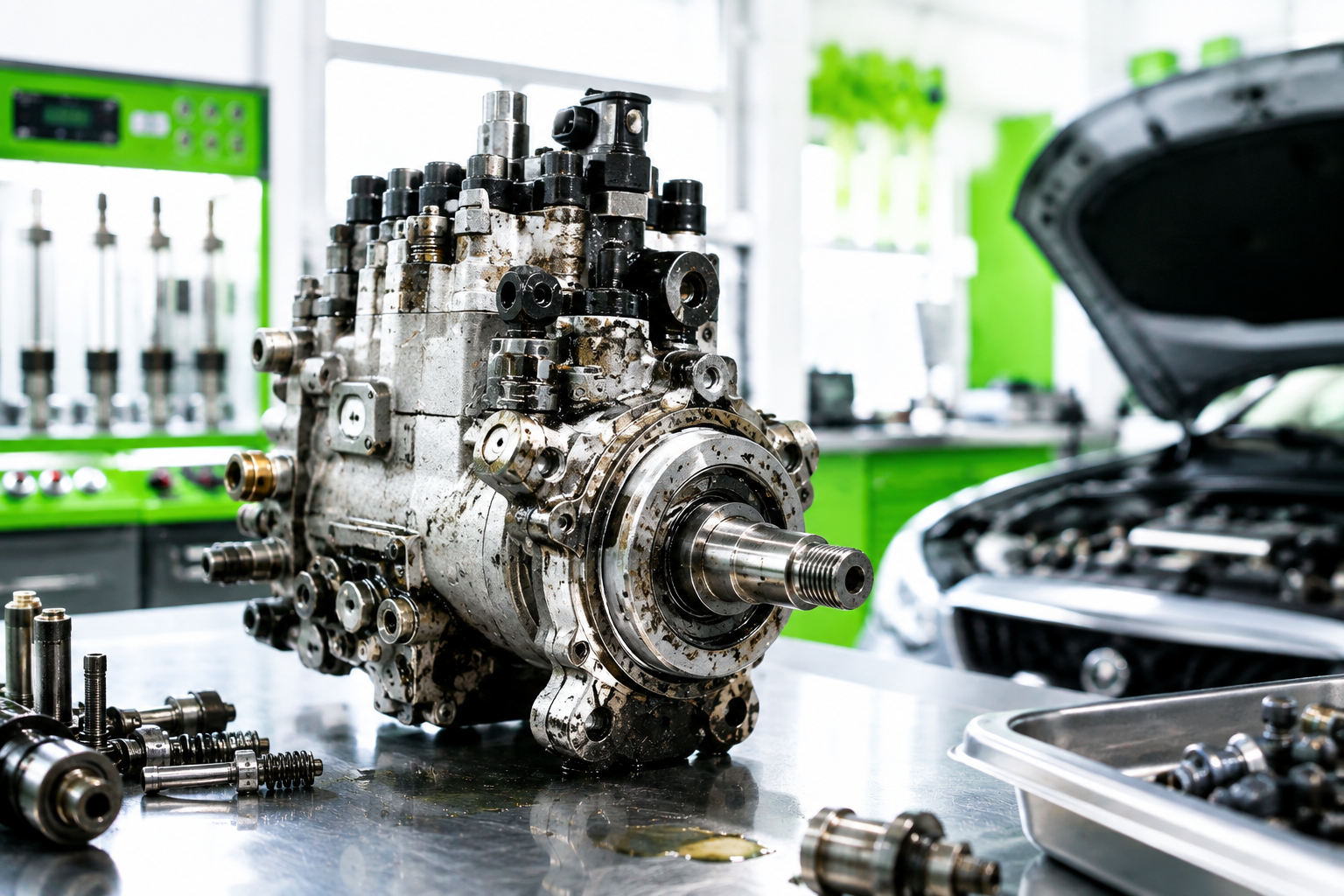
What it means when the HPFP is "making metal"
Diesel owners often say that "the pump is making metal". What this actually means is that heavy wear has started inside the high-pressure fuel pump (HPFP). As the pump runs, its metal surfaces wear away, and fine metal particles enter the fuel system along with the fuel.
This is one of the most dangerous fuel system faults. If the problem is not dealt with in time, the metal debris can damage not only the pump itself but also the injectors, the fuel rail and other Common Rail components.
That is why, at the first signs of trouble, it is important to stop driving the vehicle and get a professional diagnosis as soon as possible.
Why an HPFP starts shedding metal
The most common cause is natural wear of the pump's internal parts. However, there are other factors that greatly speed up this process.
The main causes are:
- poor-quality diesel fuel;
- water getting into the fuel system;
- overdue fuel filter changes;
- driving for a long time with a faulty pump;
- insufficient lubrication of the HPFP's precision parts;
- high vehicle mileage.
In most cases the problem does not appear overnight. At first the pump runs with minor wear, but over time the amount of metal debris increases and the risk of a serious failure rises sharply.
How to tell the HPFP is the problem
In the early stages it is hard to pin down the fault from the way the vehicle behaves alone. However, there are several typical symptoms that may point to a worn fuel pump.
Drivers most often notice:
- hard starting;
- loss of power;
- rough idle;
- higher fuel consumption;
- the engine going into limp mode;
- fuel system fault codes.
These symptoms do not always mean the pump has already started shedding metal, but they are a serious reason to have the fuel system checked.
Why metal debris is dangerous
The main problem is not limited to the pump itself.
The metal debris circulates through the entire system with the fuel. It passes through the fuel rail, gets into the injectors and settles in the fuel lines and the tank.
Common Rail injectors operate with extremely tight clearances between their parts. Even tiny metal particles can damage their precision components, causing the injectors to malfunction or fail completely.
That is why, after an HPFP failure, it is often not one component but the whole fuel system that has to be repaired.
Is replacing the HPFP enough?
No. This is one of the most common mistakes.
If another pump is fitted but the metal debris is not removed from the system, it will very quickly get into the new or rebuilt HPFP. The fault will then recur, and the owner will be paying for repairs all over again.
Once metal debris has appeared, the fuel system needs a complete overhaul. Depending on the extent of the damage, this may include:
- diagnosis and repair or replacement of the HPFP;
- testing the injectors on a dedicated test bench;
- cleaning or flushing the fuel rail;
- cleaning the fuel lines;
- flushing the fuel tank;
- a mandatory fuel filter change.
Only this comprehensive approach fully eliminates the consequences of the fault.
Can you keep driving the vehicle?
If you suspect the HPFP has started to break up, it is better to stop driving the vehicle.
Every engine start adds more metal debris to the system, and with it the risk of damage to the injectors and other expensive components grows.
The sooner the diagnosis is done, the better the chance of getting away with a smaller repair.
How to prevent metal debris
Natural wear cannot be ruled out entirely, but considerably extending HPFP life is entirely realistic.
To do this, we recommend:
- using quality diesel fuel;
- changing the fuel filter regularly;
- not driving the vehicle with obvious symptoms of a fault;
- having the fuel system diagnosed periodically;
- dealing promptly with even minor irregularities in how the engine runs.
These simple steps help reduce the risk of an expensive fuel system repair.
Conclusion
Metal debris in the HPFP is a serious fault that can damage the entire fuel system. In most cases the problem is not limited to the pump: the debris gets into the injectors, fuel rail and other components, driving up the repair cost considerably.
If you have noticed signs of a fuel system fault or suspect the HPFP has started "making metal", don't put off the diagnosis. A timely check will establish the extent of the damage and prevent even higher costs.